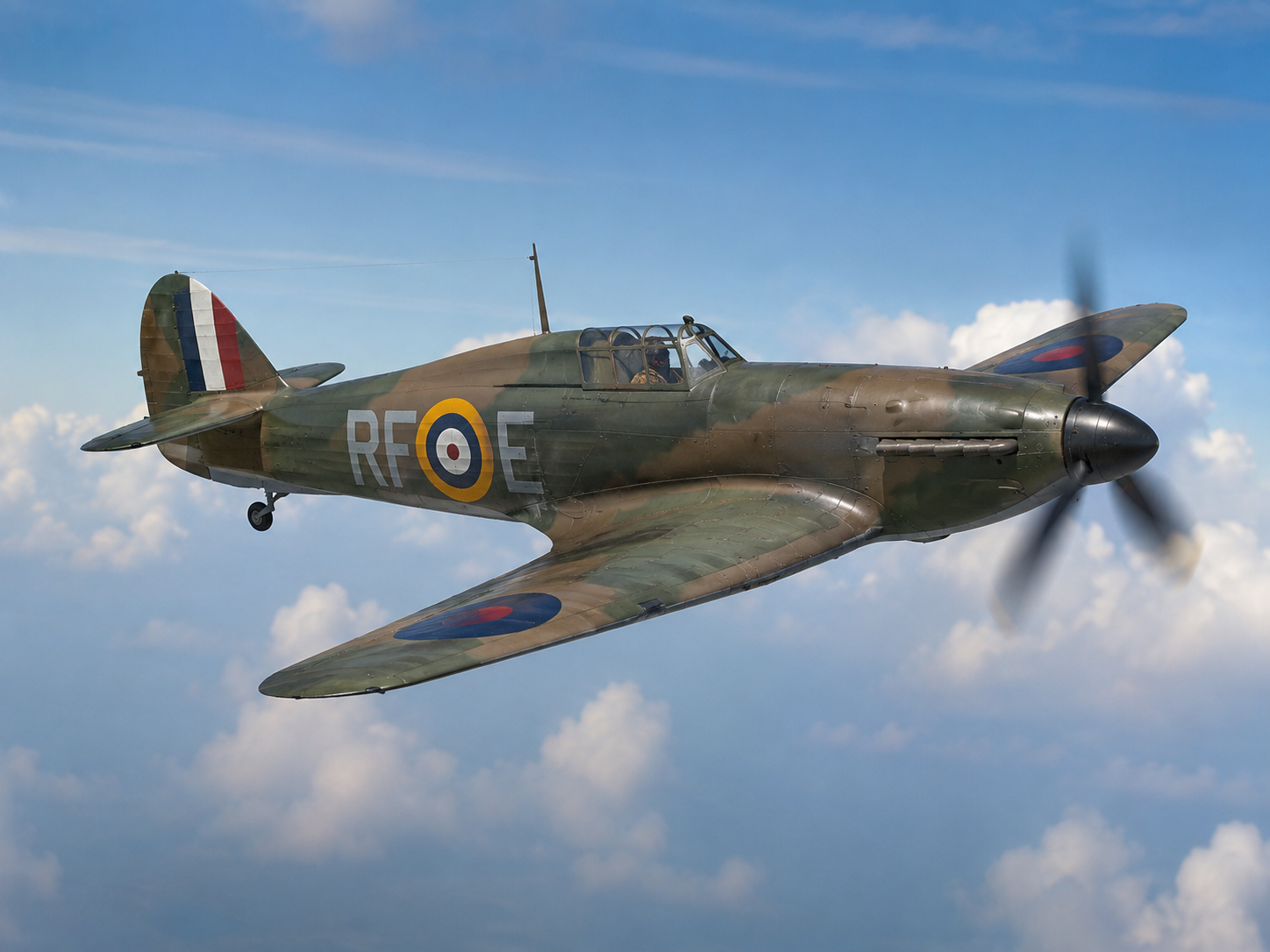
RAF Hurricane operations · 1937–1945
The Hurricane served as interceptor, night fighter, fighter-bomber, tank-buster, naval fighter and overseas workhorse. For modellers, the key is choosing the exact theatre and mark before deciding on fabric wing, metal wing, tropical filter, naval equipment or rocket/cannon fit.

Role & strengths
- RAF interceptor and bomber destroyer
- Rugged, stable gun platform
- Wide-track undercarriage and fabric rear fuselage
- Excellent desert, naval and overseas modelling routes
- Strong squadron-code and ace-story options
Key theatres
- Battle of Britain
- North Africa and Malta
- Arctic convoys and Sea Hurricane operations
- Burma, India and Soviet lend-lease
Specification Mk.I
Survivors today

Surviving Hurricanes are especially useful for fabric/metal contrast, wide undercarriage stance, radiator shape, cockpit framing and restrained RAF weathering.
View survivorsTimeline highlights
Build this Hurricane as…
Pick the modelling route first. The Hurricane changes dramatically by theatre: fabric/metal wings, tropical filters, naval hooks, cannon wings, rockets and desert finish all matter.
Aircraft identity
Early fabric-wing Hurricanes and later metal-wing aircraft weather differently. Check the subject before adding panel lines or chipping.
Do not weather a Hurricane like a Spitfire. Fabric areas fade and dirty differently; metal wing roots and gun access panels take sharper wear.
Paint scheme cards
Core 1940 Fighter Command finish. Match roundels, spinner and underside date carefully.
Very useful for early Hurricanes. Check exact aircraft, wing type and date before painting.
Desert Hurricanes show dust, sun fading, filter grime and rough field repairs.
Sea Hurricanes need hook/spool details, naval markings and salt-weathered finishes.
Campaign cards
Use 1, 32, 56, 85, 111, 242, 303, 501 or 605 Squadron references. Focus on RAF codes, Sky underside and fabric/metal wear.
Tropical filters, dust abrasion, sun-faded camouflage and rough forward-strip maintenance make strong modelling subjects.
Carrier/CAM ship context adds naval hooks, catapult spools, salt staining and unusual markings.
High wear, mud, heat, improvised repairs and alternative markings give late-service variety.
Build difficulty and related guides
Moderate. Shape is forgiving, but wing type, radiator, propeller and theatre fit require research.
High. Fabric wing, metal wing, naval and desert fits are easy to mix up.
Medium-high. Fabric and metal areas must not be weathered the same way.
RAF Hurricane squadrons and units
Sortable Hurricane unit cards covering key Battle of Britain, desert, naval and overseas modelling routes. Click a card for markings, base context and modeller notes.
Hurricane operating map
Airfield info
Click a marker to show linked Hurricane unit cards and modelling notes.
Campaign timeline
Survivors
Books and reference sources
Hurricane build guide
Hurricane videos, photos and archive material
Media replaces the old separate walkaround tab: cockpit, exhaust, undercarriage, markings, survivor references, archive imagery and video cards are grouped here.