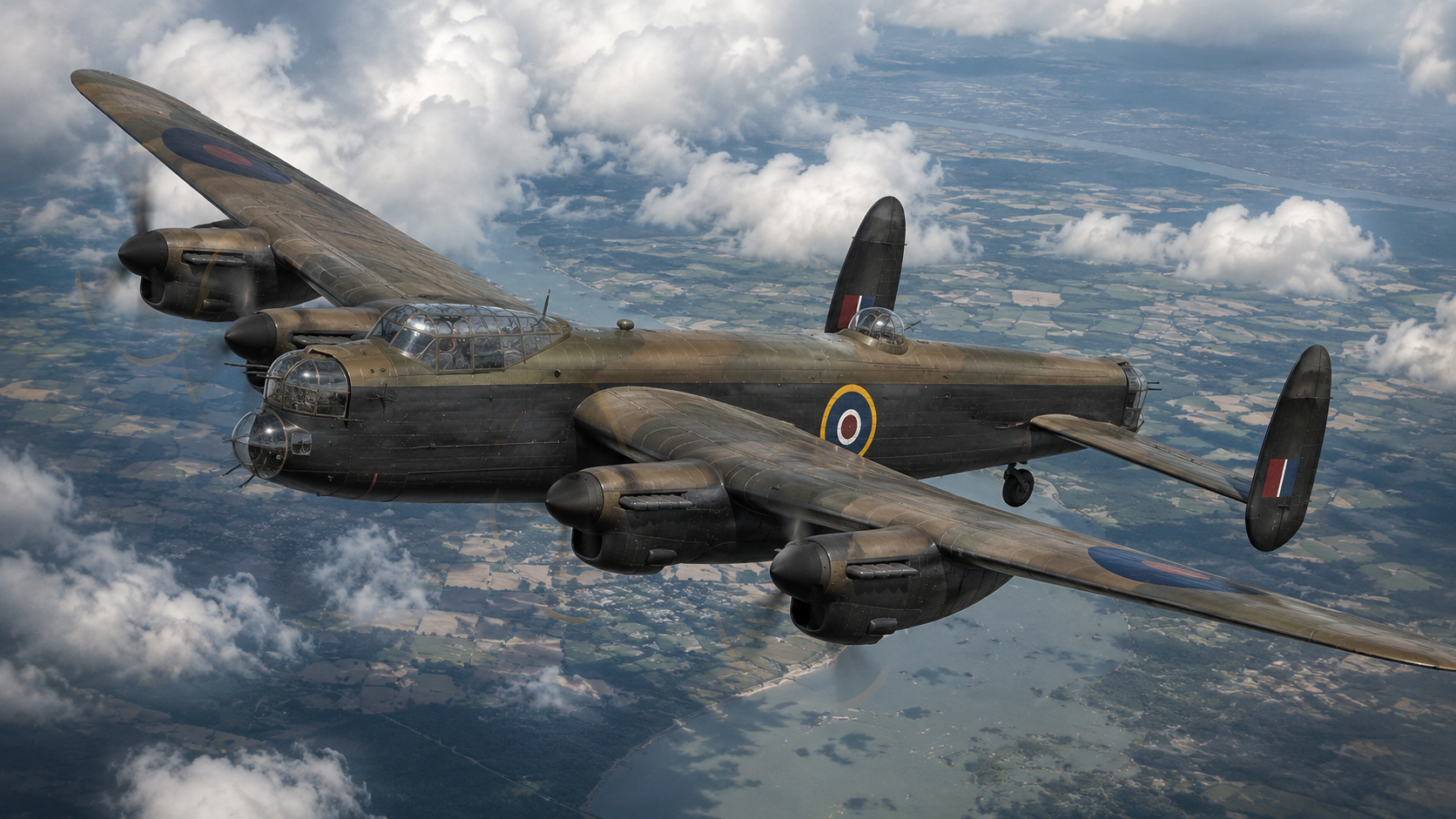
RAF Lancaster operations · 1942–1945
The Lancaster served as Main Force night bomber, Pathfinder aircraft, mine-layer, Tallboy/Grand Slam carrier and specialist precision-strike aircraft. For modellers, the most important choice is the exact squadron, date, bomb-load and turret/equipment fit before choosing decals or aftermarket.

Role & strengths
- RAF Bomber Command heavy bomber
- Large bomb bay and specialist ordnance options
- Rich squadron, nose-art and raid-specific modelling routes
- Night camouflage, exhaust staining and service grime
- Turret, aerial, H2S and window/chaff details vary by aircraft
Key theatres
- Ruhr, Hamburg and Berlin night offensive
- Dambusters and special operations
- Normandy / transport-plan operations
- Tallboy and Grand Slam precision attacks
Specification B.I
Survivors today

Surviving Lancasters are vital for turret framing, bomb bay depth, undercarriage stance, Merlin exhaust staining and large-airframe weathering.
View survivorsTimeline highlights
Build this Lancaster as…
Choose the modelling route first. Main Force, Dambusters, Pathfinder and Tallboy aircraft have different aerials, turrets, bomb bay loads, markings and weathering patterns.
Aircraft identity
Do not mix Dambuster, standard B.I/B.III, H2S, Tallboy and late-war details. Check the exact aircraft and raid.
Lancaster weathering is about exhaust staining, boot scuffs, hydraulic/oil leaks and matt black fading — not random silver chipping.
Paint scheme cards
Classic Bomber Command finish. Night black fades, chalks and collects exhaust staining.
Check Upkeep mine, deleted/modified turrets and aircraft-specific code/nose details.
Pathfinder aircraft need aerial, marking and role-specific research.
Special bomb bay and loadout define these subjects more than camouflage alone.
Campaign cards
Use 44, 50, 57, 61, 83, 97, 101 or 460 Squadron routes. Focus on codes, exhaust staining and black underside finish.
617 Squadron Dambusters aircraft require B.III Special detail, Upkeep mine fit and aircraft-code accuracy.
8 Group aircraft add specialist navigation/marking roles and often heavier nose/canopy research value.
Late-war precision subjects need modified bomb bay, specialist ordnance and clean research before buying parts.
Build difficulty and related guides
High. Size, turrets, transparencies and paint finish make the Lancaster a serious project.
Very high. Canopy, turrets and clear parts need careful masking or aftermarket masks.
High. Exhaust staining dominates, but it needs direction, layering and restraint.
RAF Lancaster squadrons and units
Sortable Lancaster unit cards covering Bomber Command, Dambusters, Pathfinders and specialist heavy-bomber modelling routes. Click a card for base, codes, aircraft fit and modeller notes.
Lancaster operating map
Airfield info
Click a marker to show linked Lancaster unit cards and modelling notes.
Campaign timeline
Survivors
Books and reference sources
Lancaster build guide
Lancaster videos, photos and archive material
Media replaces the old separate walkaround tab: cockpit, exhaust, undercarriage, markings, survivor references, archive imagery and video cards are grouped here.