RAF Mosquito operations · 1941–1950s
The Mosquito served across night fighting, precision bombing, low-level strike, intruder operations, Coastal Command anti-shipping and high-altitude photo reconnaissance. For modellers, the role defines the aircraft: radar aerials, smooth bomber noses, cannon packs, rocket rails, cameras and PR paint schemes all need different research.
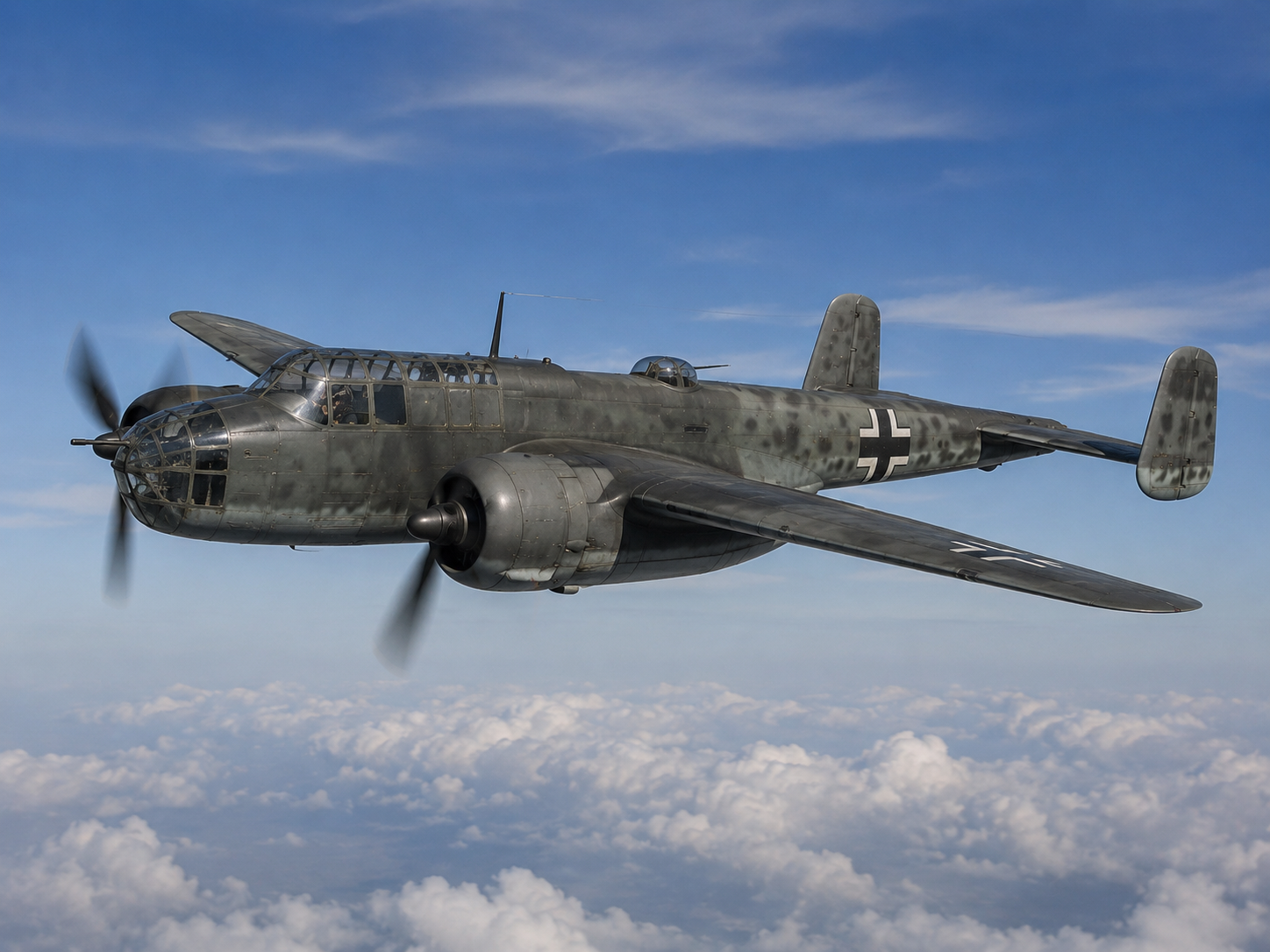
Role & strengths
- Fast twin-engine wooden aircraft
- Night fighter, bomber, intruder and fighter-bomber routes
- Minimal defensive armour on many variants — speed as protection
- Distinctive nacelles, wooden finish and clean airframe lines
- Rich RAF, Banff Strike Wing and PR modelling options
Key theatres
- Night defence of Britain
- Low-level precision raids over Europe
- Banff Strike Wing anti-shipping operations
- Photo reconnaissance and Pathfinder work
Specification FB.VI
Survivors today

Surviving and restored Mosquitos are especially useful for cockpit glazing, wooden airframe finish, nacelles, undercarriage stance, cannon pack and radiator/oil staining.
View survivorsTimeline highlights
Build this Mosquito as…
Pick the modelling route first. The Mosquito changes dramatically between bomber, night fighter, PR and fighter-bomber subjects.
Aircraft identity
Do not mix bomber, fighter-bomber, night-fighter and PR noses. The nose, canopy, aerials and stores change the whole model.
The Mosquito’s wooden structure means wear patterns differ from metal fighters. Focus on exhaust, nacelle grime, access wear and paint fading rather than heavy chipping.
Paint scheme cards
Common late-war FB.VI finish. Match squadron codes, invasion stripes and rocket/bomb fit carefully.
Night-fighter subjects need radar aerials, subdued markings and careful black finish modulation.
PR Mosquitos reward clean lines, camera ports, subtle fading and minimal weapons clutter.
Banff/Coastal aircraft need salt, rocket rails, underwing stores and hard maritime weathering.
Campaign cards
Use 85, 157 or 456 Squadron routes. Focus on radar aerials, black finish and subdued markings.
105 and 139 Squadron bomber routes suit clean airframes, speed, low-level target context and restrained staining.
235, 248 and 333 Squadron routes add rockets, maritime grime, salt and anti-shipping wear.
PRU Mosquitos need camera ports, PRU Blue finish and very careful surface treatment.
Build difficulty and related guides
Medium-high. Fit is often manageable, but nacelles, glazing and variant detail matter.
High. Nose, radar, stores, cameras and canopy fit change by mark and role.
Medium. Easy to overchip. Wooden structure requires restrained, role-specific wear.
RAF Mosquito squadrons and units
Sortable Mosquito unit cards covering night fighter, bomber, fighter-bomber, Banff Strike Wing and PR modelling routes. Click a card for base, role, markings and modeller notes.
Mosquito operating map
Airfield info
Click a marker to show linked Mosquito unit cards and modelling notes.
Campaign timeline
Survivors
Books and reference sources
Mosquito build guide
Mosquito videos, photos and archive material
Media replaces the old separate walkaround tab: cockpit, exhaust, undercarriage, markings, survivor references, archive imagery and video cards are grouped here.