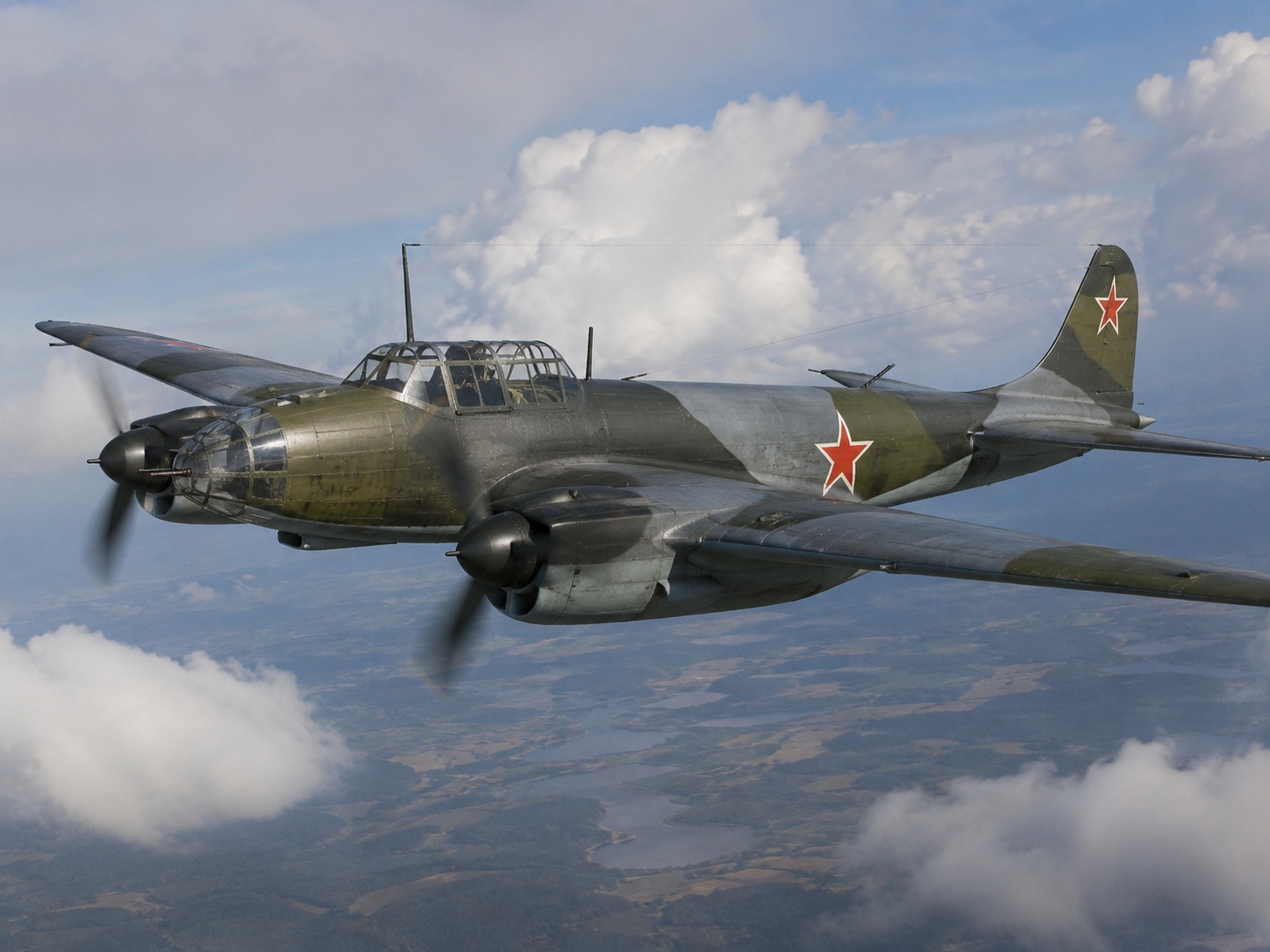
Pe-2 operations · 1941–1945
The Pe-2 was one of the most important Soviet twin-engine aircraft of the war. It served as a fast bomber, dive bomber, reconnaissance aircraft and attack platform, appearing across Moscow, Stalingrad, Kursk, Bagration and the final offensive into Germany. For a model, the challenge is bomber detail rather than fighter simplicity: cockpit and nose glazing, crew stations, nacelle seams, defensive guns, bomb racks, underside grime and red-star/bort-number placement.

Role & strengths
- Soviet fast bomber, dive bomber and reconnaissance aircraft
- Moscow, Stalingrad, Kursk, Bagration, Poland and Berlin routes
- Glazed nose, crew compartment, defensive gun stations and twin nacelles
- AMT green/black or three-colour schemes, red stars and bort numbers
- Nacelle exhaust staining, underside grime, bomb-rack wear and rough-field weathering
Key theatres
- Moscow and 1941 defensive bombing routes
- Stalingrad and southern front bomber operations
- Kursk and Bagration tactical bombing
- Poland, Berlin and late-war Guards bomber regiments
Specification Pe-2FT
Survivors today

Pe-2 survivors and restorations are useful for cockpit/nose glazing, nacelle shape, undercarriage, defensive guns, bomb-rack layout and red-star placement, but restoration paint needs checking.
View survivorsTimeline highlights
Build this Pe-2 as…
Pick the campaign and variant first. A 1941 Pe-2, a Stalingrad bomber, a Kursk dive-bomber, a Guards BAP late-war aircraft and a reconnaissance route all need different weathering and loadout decisions.
Aircraft identity
Pe-2, Pe-2FT and reconnaissance aircraft differ in guns, glazing, equipment and markings. Check the exact aircraft before decals.
The Pe-2 is a clear-parts project. Mask the nose/cockpit early and plan interior painting before closing the fuselage.
Paint scheme cards
Early and mid-war Pe-2 route with green/black uppers and blue-grey lower surfaces.
Late Pe-2FT subjects can use green/brown/dark grey patterns with strong field variation.
Whitewash routes need worn leading edges, access zones and nacelle exhaust over white.
Weathering should focus on nacelles, belly, bomb racks, wheels and gun positions.
Campaign cards
Early Pe-2 route with green/black camouflage, red stars and emergency defensive context.
Southern front Pe-2s need dust, winter transition and rough-field bomber wear.
Pe-2FT dive-bomber route with bomb racks, nacelle staining and tactical support missions.
Guards BAP routes with late VVS camouflage, bort numbers and campaign-worn finishes.
Build difficulty and related guides
High. Clear parts, nacelles, undercarriage, defensive guns and bomb loads need careful sequencing.
Very high. Nose and cockpit framing make masks strongly recommended.
High. Nacelle exhaust, underside grime, winter whitewash and bomb-rack wear need layering.
Pe-2 bomber regiments and Guards units
Sortable Pe-2 bomber-unit cards covering Moscow, Stalingrad, Kursk, Bagration, Berlin, reconnaissance and survivor/reference routes.
Pe-2 operating map
Airfield info
Click a marker to show linked Pe-2 unit cards and modelling notes.
Campaign timeline
Survivors
Books and reference sources
Pe-2 build guide
Pe-2 videos, photos and archive material
Media replaces the old separate walkaround tab: cockpit, exhaust, undercarriage, markings, survivor references, archive imagery and video cards are grouped here.