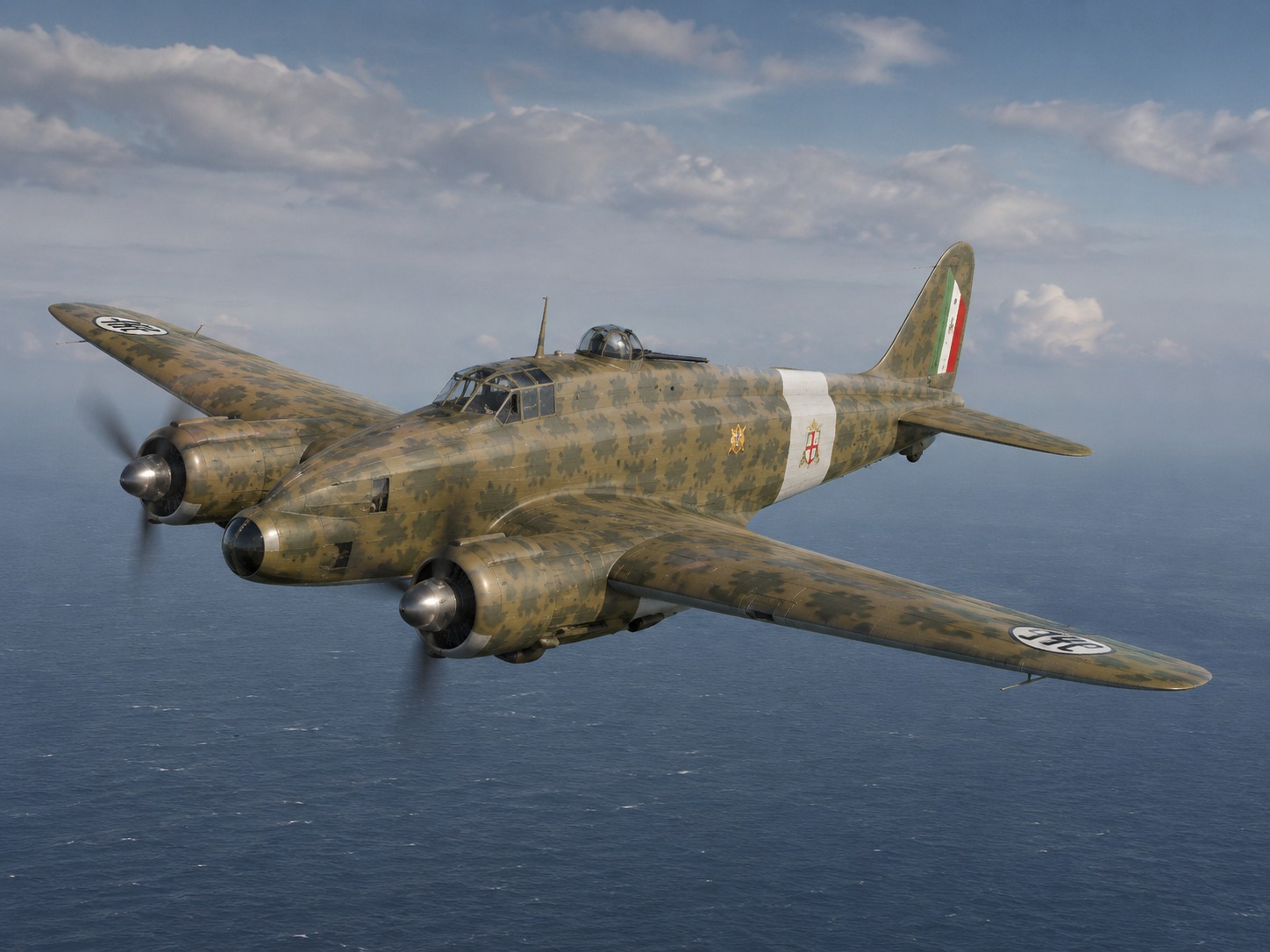
SM.79 operations · 1936–1945
The SM.79 began as a fast trimotor bomber and became one of the most effective Axis torpedo aircraft in the Mediterranean. It served with Regia Aeronautica bomber and torpedo units over Malta, North Africa, the central Mediterranean and anti-shipping routes, then appeared in ANR/captured and reference contexts. A good SM.79 build starts with the role: early bomber, torpedo bomber, Malta convoy attacker, North Africa route, ANR/captured route or survivor/reference subject.

Role & strengths
- Italian trimotor bomber and torpedo bomber with major Mediterranean service
- Malta convoys, North Africa, central Mediterranean, anti-shipping, ANR/captured and reference routes
- Three radial engines, humped fuselage, ventral gondola, torpedo/bomb fit and large glazing areas
- Italian sand/green/brown camouflage, grey undersides, white theatre bands and Regia markings
- Salt fading, oil, three-engine exhaust staining, dusty airfields, torpedo wear and restrained chipping
Key theatres
- Mediterranean anti-shipping and Malta convoy routes
- North Africa and central Mediterranean bomber/torpedo routes
- ANR/captured and late-war operator routes
- Survivor and restoration-reference routes
Specification SM.79-II
Survivor/reference today

SM.79 survivors and restorations are valuable for the fuselage hump, glazing, gondola, engines and landing gear, but wartime camouflage and torpedo-unit markings should be checked separately.
View referencesTimeline highlights
Build this SM.79 as…
Pick role and theatre first. Bomber, torpedo bomber, Malta convoy attacker, North Africa aircraft and ANR/captured subjects need different stores and markings.
Aircraft identity
Bomber and torpedo-bomber SM.79s differ. Check torpedo rack, gondola, gun positions, glazing and antennae.
Three engines create a lot of exhaust and oil. Keep staining directional and avoid random all-over grime.
Paint scheme cards
Core torpedo route with salt fading, white bands and Regia markings.
Bomber route with grey undersides and heavy exhaust/weathering opportunities.
Late-war/operator-specific route where markings must be checked carefully.
Weather nacelles, wing roots, belly, torpedo fit, wheels and gun positions logically.
Campaign cards
Classic torpedo bomber route with anti-shipping context and salt-faded camouflage.
Dusty airfield route with sun fading, sand wear and theatre markings.
Bomber/torpedo route with varied unit markings and maritime grime.
Late-war/operator route where reference accuracy is essential.
Build difficulty and related guides
High. Large glazed trimotor with fit, masking and weathering challenges.
High. Canopy, nose, dorsal and gondola glazing need careful masking.
High. Three engines, torpedo fit and maritime conditions need layered restraint.
Savoia-Marchetti SM.79 units and torpedo groups
Sortable SM.79 cards covering torpedo bomber, Malta convoy, North Africa, bomber, ANR/captured and survivor/reference routes.
SM.79 Sparviero operating map
Airfield info
Click a marker to show linked SM.79 unit cards and modelling notes.
Campaign timeline
Survivors
Books and reference sources
SM.79 Sparviero build guide
SM.79 Sparviero videos, photos and archive material
Media replaces the old separate walkaround tab: cockpit, exhaust, undercarriage, markings, survivor references, archive imagery and video cards are grouped here.