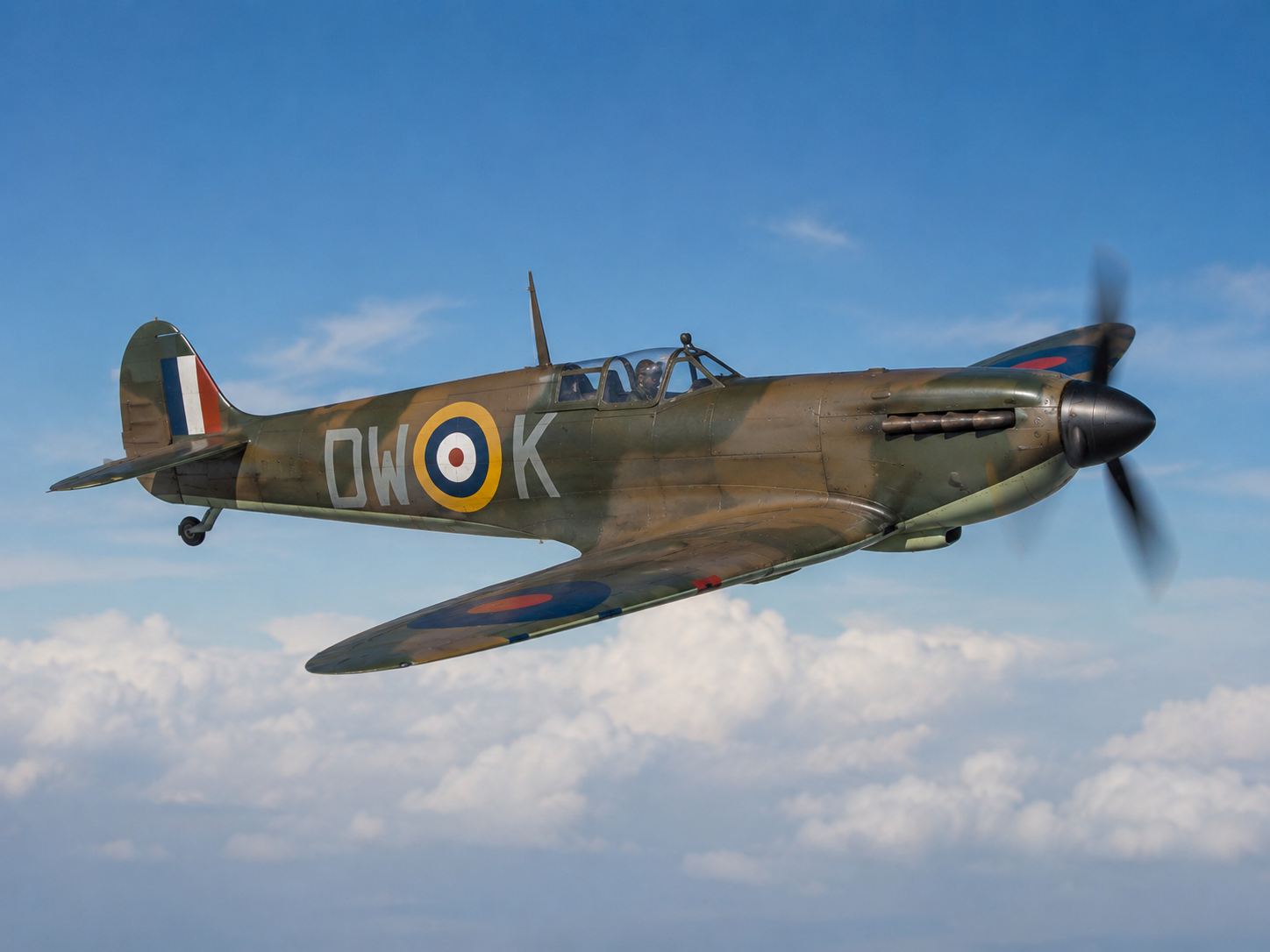
RAF Spitfire operations · 1938–1945
The Spitfire served as interceptor, escort fighter, fighter-bomber, reconnaissance aircraft and late-war air-superiority fighter. For modellers, the key is choosing a precise aircraft, date and squadron before buying decals or committing to a camouflage scheme.

Role & strengths
- RAF interceptor and air-superiority fighter
- Excellent turning performance and climb
- Iconic Battle of Britain subject
- Large range of variants and theatres
- Rich squadron code and pilot-story options
Key theatres
- Battle of Britain
- Channel Front and offensive sweeps
- Mediterranean and Malta
- North-West Europe
Specification Mk.I
Survivors today
Surviving Spitfires are excellent references for cockpit framing, undercarriage stance, exhaust pattern, wing-root wear and restored RAF markings.
View survivorsTimeline highlights
Build this Spitfire as…
Pick a modelling route first. It drives the variant, propeller, aerial mast, paint scheme, decals and weathering.
Aircraft identity
Do not mix Mk.I, Mk.II, Mk.V and Mk.IX details. Propeller, wing, cannon, aerial and spinner details change.
Battle of Britain Spitfires were hard-used but not Pacific-chipped. Keep chipping restrained and focus on exhaust, dust and wing-root wear.
Paint scheme cards
Core 1940 Fighter Command finish. Match roundels and underside details to date.
Early-war underside changes are a research trap. Check aircraft and date before painting.
Malta and desert Spitfires need careful subject-specific references because colour interpretation varies.
Ocean Grey, Dark Green and Medium Sea Grey suit later Merlin Spitfires, not 1940 Mk.I subjects.
Campaign cards
Use 19, 54, 74, 92, 602 or 609 Squadron references. Focus on RAF codes, Sky underside, gun patches and summer 1940 wear.
Later Mk.II/Mk.V sweeps add more variety: cannon wings, different spinners and heavier operational grime.
High-fade, high-dust theatre. Choose a specific aircraft before trusting any colour profile.
Late-war markings, invasion stripes and clipped-wing subjects need variant-specific kit choices.
Build difficulty and related guides
Moderate. The airframe is straightforward, but variant details and cockpit/canopy finish matter.
Medium-high. Canopy framing and RAF camouflage demarcation need clean planning.
Medium. Easy to overdo. Keep RAF fighter wear restrained and evidence-led.
RAF Spitfire squadrons and units
Sortable Spitfire unit cards covering key Battle of Britain squadrons and modelling routes. Click a card for markings, base context and modeller notes.
Spitfire operating map
Airfield info
Click a marker to show linked Spitfire unit cards and modelling notes.
Campaign timeline
Survivors
Books and reference sources
Spitfire build guide
Spitfire videos, photos and archive material
Media replaces the old separate walkaround tab: cockpit, exhaust, undercarriage, markings, survivor references, archive imagery and video cards are grouped here.