Tu-2 operations · 1942–1945
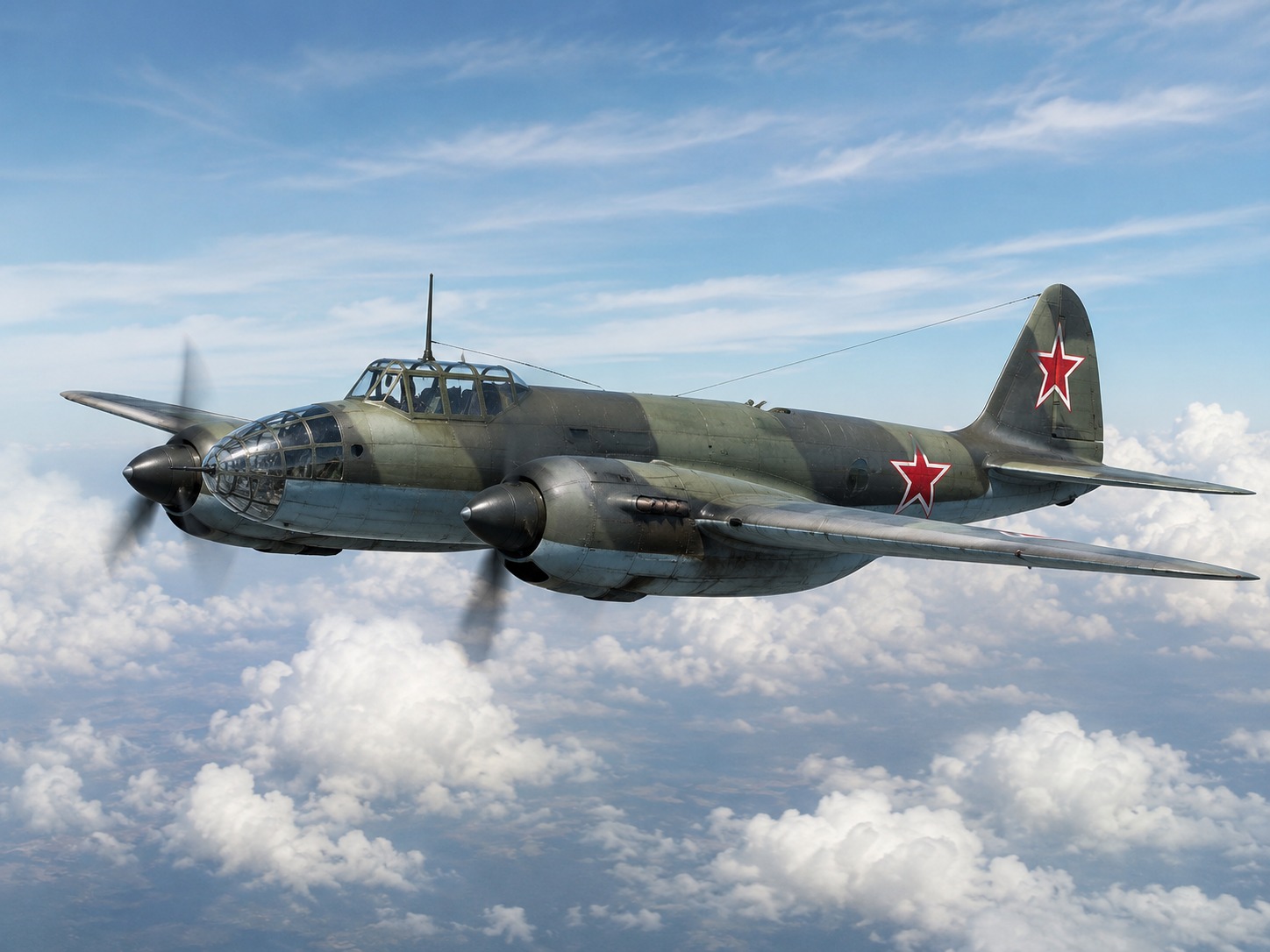
The Tu-2 was a fast, modern Soviet bomber that combined speed, bomb load and defensive firepower. It was too late to define the early Eastern Front in the way the Tu-2 did, but it became a powerful late-war aircraft during the Soviet advance west. A good model should feel heavier and more purposeful than a Tu-2: radial nacelles, strong landing gear, solid bomber stance, broad wings, crew positions, bomb load and late-war VVS finish.
Role & strengths
- Soviet medium bomber, fast attack bomber and reconnaissance platform
- Bagration, Baltic, Poland, Berlin and late-war Guards bomber routes
- Radial nacelles, strong stance, crew glazing and defensive gun positions
- AMT camouflage, red stars, bort numbers and late-war VVS markings
- Radial exhaust staining, underside grime, bomb-rack wear and rough-field weathering
Key theatres
- Central Front and late-war bomber deployment
- Operation Bagration and the Soviet westward advance
- Baltic and Poland tactical bombing routes
- Berlin and post-war Far East/reference possibilities
Specification Tu-2S
Survivors today

Tu-2 survivors and restorations are useful for radial nacelles, cockpit/crew glazing, undercarriage, defensive guns, bomb-rack layout and red-star placement, but restoration paint needs checking.
View survivorsTimeline highlights
Build this Tu-2 as…
Pick the campaign and variant first. A production Tu-2S, a Bagration bomber, a late Guards BAP aircraft, a Berlin/final offensive route and a reconnaissance Tu-2R all need different details and weathering.
Aircraft identity
Tu-2, Tu-2S and Tu-2R routes differ in equipment, guns, production detail and markings. Do not simply copy a museum aircraft without checking.
The Tu-2 should show strong radial exhaust and bomber grime, but keep it directional around nacelles, belly, wheels, guns and bomb racks.
Paint scheme cards
Core late-war Tu-2 route with red stars and bort numbers.
Weathering should focus around nacelles, belly, bomb racks and wheel bays.
Whitewash routes need worn leading edges, access zones and exhaust over white.
Recon builds should be cleaner than heavy bombing subjects, but still operationally worn.
Campaign cards
Tu-2 route with development/early-service context and more cautious subject selection.
Late-war Soviet bomber route with tactical support, radial staining and field wear.
Final-offensive route with Guards markings, red stars and heavily used but organised VVS finish.
Reconnaissance route with camera/mission logic, cleaner weathering and specific variant references.
Build difficulty and related guides
High. Twin-engine alignment, nacelles, glazing, guns and bomb loads need careful sequencing.
High. Radial engines, exhausts and undercarriage must line up cleanly.
High. Radial exhaust, underside grime, winter whitewash and bomb-rack wear need layering.
Tu-2 bomber regiments and Guards units
Sortable Tu-2 bomber-unit cards covering early production, Bagration, Guards BAP, Berlin, reconnaissance and survivor/reference routes.
Tu-2 operating map
Airfield info
Click a marker to show linked Tu-2 unit cards and modelling notes.
Campaign timeline
Survivors
Books and reference sources
Tu-2 build guide
Tu-2 videos, photos and archive material
Media replaces the old separate walkaround tab: cockpit, exhaust, undercarriage, markings, survivor references, archive imagery and video cards are grouped here.