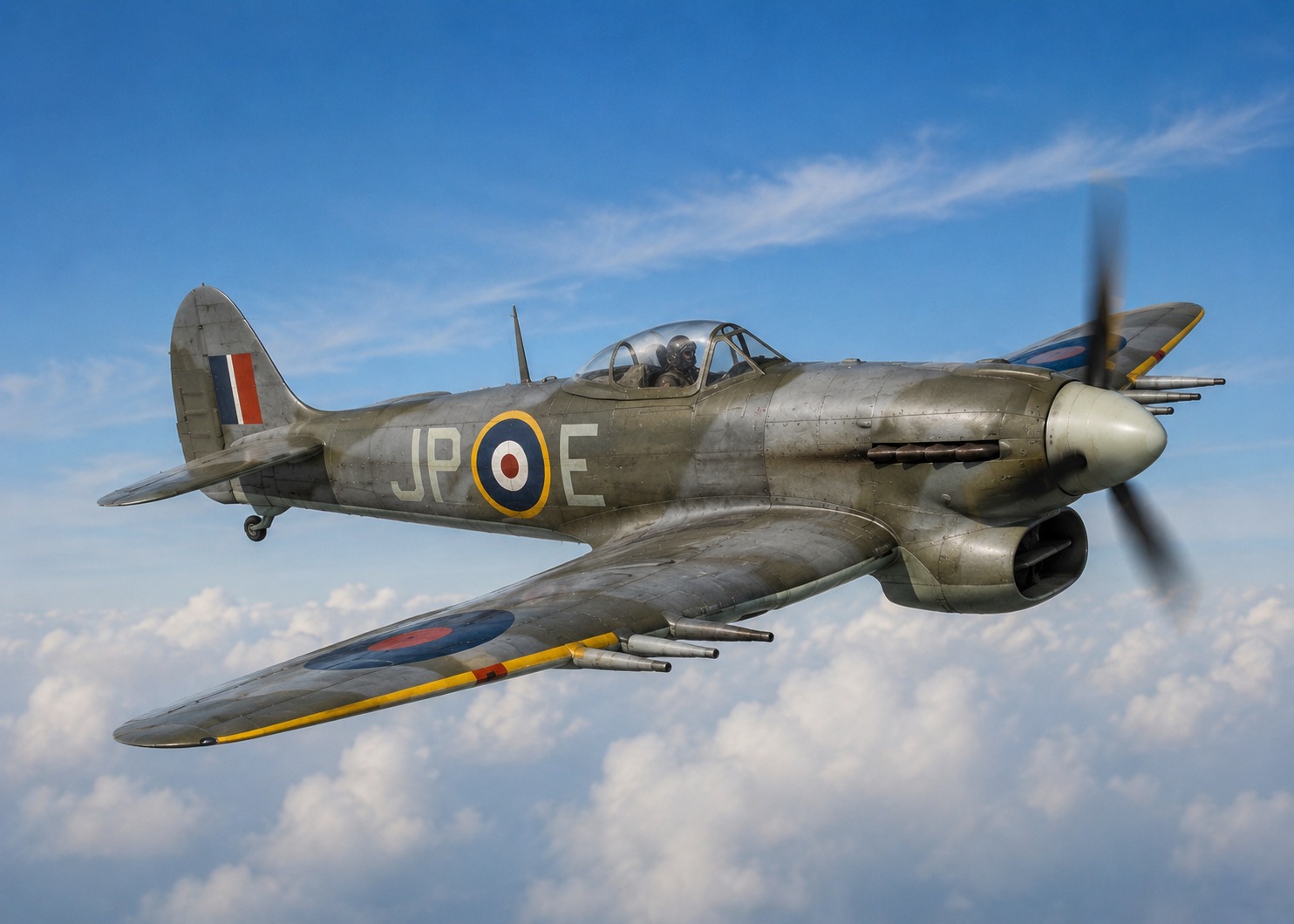
RAF Typhoon operations · 1941–1945
The Typhoon evolved from a troubled interceptor into one of the most important Allied ground-attack aircraft of 1944–45. For modellers, it is all about the operational fit: car-door or bubble canopy, early or late tailplane, bombs or RP-3 rockets, invasion stripes, dust, oil and low-level battlefield grime.

Role & strengths
- Low-level fighter-bomber and close-support aircraft
- RP-3 rockets, bombs and four 20 mm cannon
- Strong Normandy / Falaise / 2nd TAF modelling identity
- Heavy oil, dust, exhaust and invasion-stripe wear
- Car-door and bubble-canopy subject variety
Key theatres
- Channel Front and low-level sweeps
- D-Day and Normandy close support
- Falaise, Seine crossings and tactical strikes
- North-West Europe 1944–45
Specification Mk.IB
Survivors today

Typhoon survivor and restoration references are valuable for cockpit, radiator chin, thick wing, rocket rails, undercarriage stance and the brutal look of a low-level attack aircraft.
View survivorsTimeline highlights
Build this Typhoon as…
Choose the modelling route first. The Typhoon’s look changes with canopy, tailplane, invasion stripes, bomb/rocket fit and airfield conditions.
Aircraft identity
Car-door and bubble-canopy Typhoons need different cockpit, fuselage and often tailplane assumptions. Check the exact aircraft/date.
Invasion stripes were often rough, repainted, overpainted or partial. Do not make every 2nd TAF Typhoon look factory-neat.
Paint scheme cards
Core Typhoon finish. Add wear around wing roots, gun bays, radiator and rocket/bomb handling points.
Stripes can be rough and field-applied. Research whether upper stripes remain or were removed.
Excellent route for patchy paint, dusty forward strips and overpainted invasion markings.
Rocket rails, blast staining, mud and oil make this one of the strongest Typhoon modelling routes.
Campaign cards
Use 56, 609 and early Typhoon units. Focus on car-door canopy, recognition markings and early operational problems.
Use 181, 182, 245, 247, 198 or 609 Squadron routes. Rockets, stripes and forward-strip grime dominate.
Heavy tactical strike context. Weathering should include dust, oil, rocket residue and rough servicing.
Late-war Typhoons show overpainted stripes, bubble canopies, worn paint and mixed bomb/rocket roles.
Build difficulty and related guides
Medium-high. Stores, stripes, canopy choice and radiator detail make planning important.
High. Invasion stripes and canopy framing need careful work, especially if rough/field-applied.
High. The aircraft should look brutal, not randomly chipped. Build layers around oil, dust, rockets and access wear.
RAF Typhoon squadrons and units
Sortable Typhoon unit cards covering early Channel operations, Normandy close support, rocket units, bomb-carrying aircraft and 2nd TAF modelling routes.
Typhoon operating map
Airfield info
Click a marker to show linked Typhoon unit cards and modelling notes.
Campaign timeline
Survivors
Books and reference sources
Typhoon build guide
Typhoon videos, photos and archive material
Media replaces the old separate walkaround tab: cockpit, exhaust, undercarriage, markings, survivor references, archive imagery and video cards are grouped here.