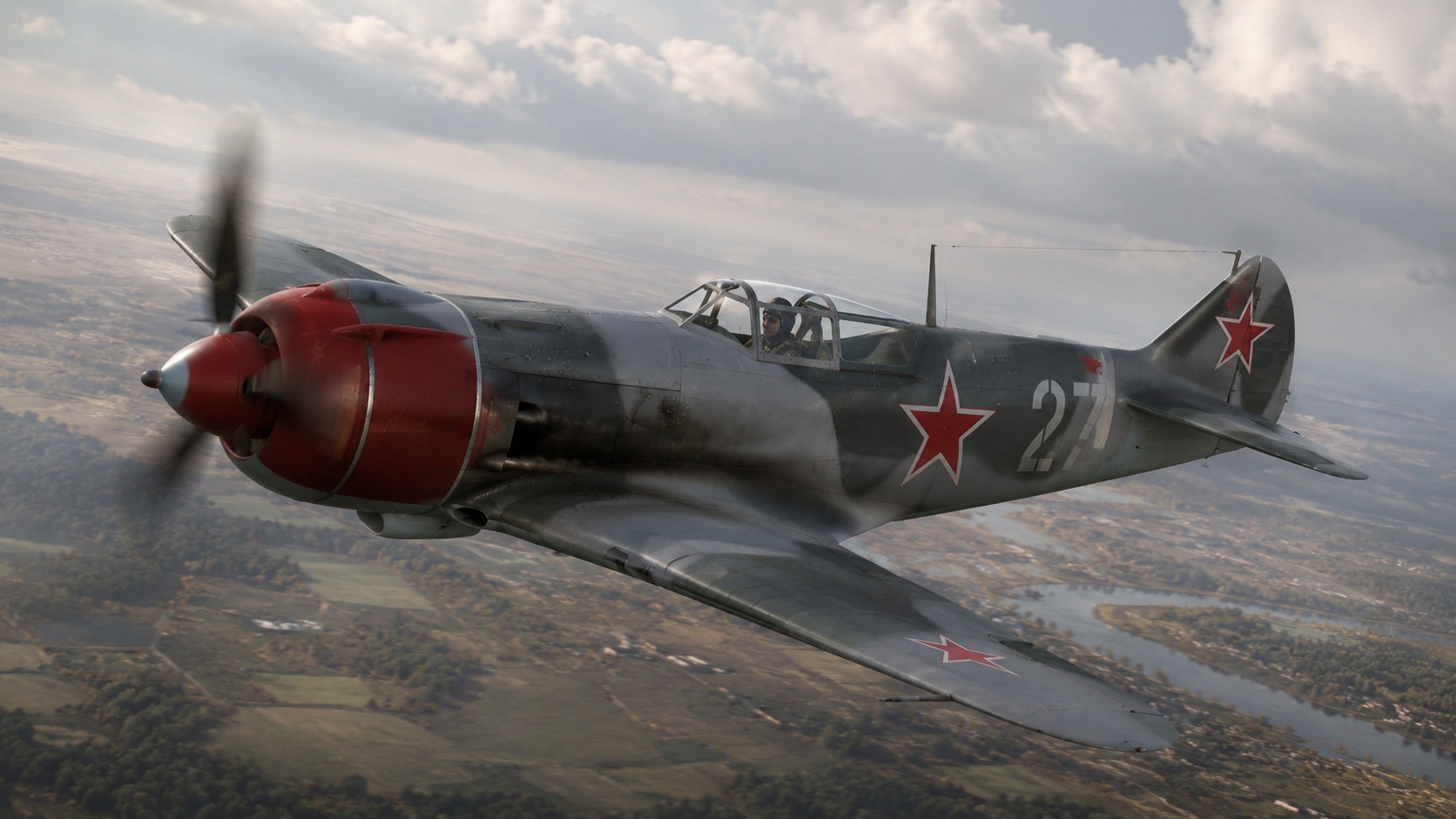
Yak-3 operations · 1944–1945
The Yak-3 arrived late but made an immediate impression. It was small, light and highly manoeuvrable, giving Soviet fighter regiments a superb tactical fighter for the final push west. Modelling it well is about restraint: clean lines, subtle grey camouflage, red stars, white tactical numbers, dusty airfields, exhaust staining and unit-specific markings rather than heavy bomber-style weathering.

Role & strengths
- Late-war Soviet lightweight tactical fighter
- Guards fighter regiments, French Normandie-Niemen and Berlin route subjects
- Clean compact airframe, low stance, spinner and refined Yakovlev lines
- VVS grey/blue camouflage, red stars and white tactical numbers
- Dust, exhaust staining, wing-root wear and restrained field weathering
Key theatres
- Belarus and Poland during the Soviet advance west
- Guards fighter operations over the Eastern Front
- Normandie-Niemen Yak-3 routes
- Berlin and final-war air superiority missions
Specification Yak-3
Survivors today

Yak-3 survivors and restorations are useful for shape, canopy, spinner, undercarriage stance, cockpit framing and red-star/tactical-number placement, but restoration paint needs checking.
View survivorsTimeline highlights
Build this Yak-3 as…
Pick the unit route first. A Guards IAP aircraft, a Normandie-Niemen Yak-3, a Berlin/final offensive fighter, a winter/spring field aircraft and a restored/survivor route all need different markings and weathering.
Aircraft identity
Yak-3s should not be weathered like Il-2s. Keep wear lighter: dust, exhaust, wing roots, access panels and field touch-ups.
Red-star outlines, tactical numbers and Normandie-Niemen markings must match the aircraft/date. Do not mix restoration markings blindly.
Paint scheme cards
Core late-war Yak-3 route with grey uppers and blue-grey lower surfaces.
Numbers and red stars create the aircraft identity. Weather them gently.
Normandie-Niemen aircraft need specific markings and restrained late-war wear.
Keep weathering fighter-scale: dust, wing roots, exhaust and small field repairs.
Campaign cards
Late-war fighter route with grey camouflage, dusty strips and Guards/tactical-number identity.
French volunteer fighter regiment route with strong story value and distinctive markings.
Final-war VVS route with restrained field wear, dusty strips and red-star markings.
Useful for shape and detail, but check repaint accuracy before copying colours exactly.
Build difficulty and related guides
Medium. The airframe is compact and clean, but the finish needs subtlety.
Medium-high. Tactical numbers, red stars and Normandie-Niemen markings need exact matching.
Medium-high. The challenge is restraint, not piling on mud.
Yak-3 fighter regiments and Guards units
Sortable Yak-3 unit cards covering Guards IAP routes, Normandie-Niemen, Bagration, Poland, Berlin and survivor/reference aircraft.
Yak-3 operating map
Airfield info
Click a marker to show linked Yak-3 unit cards and modelling notes.
Campaign timeline
Survivors
Books and reference sources
Yak-3 build guide
Yak-3 videos, photos and archive material
Media replaces the old separate walkaround tab: cockpit, exhaust, undercarriage, markings, survivor references, archive imagery and video cards are grouped here.